
What we're working with: the unfinished suburban Atlanta basement
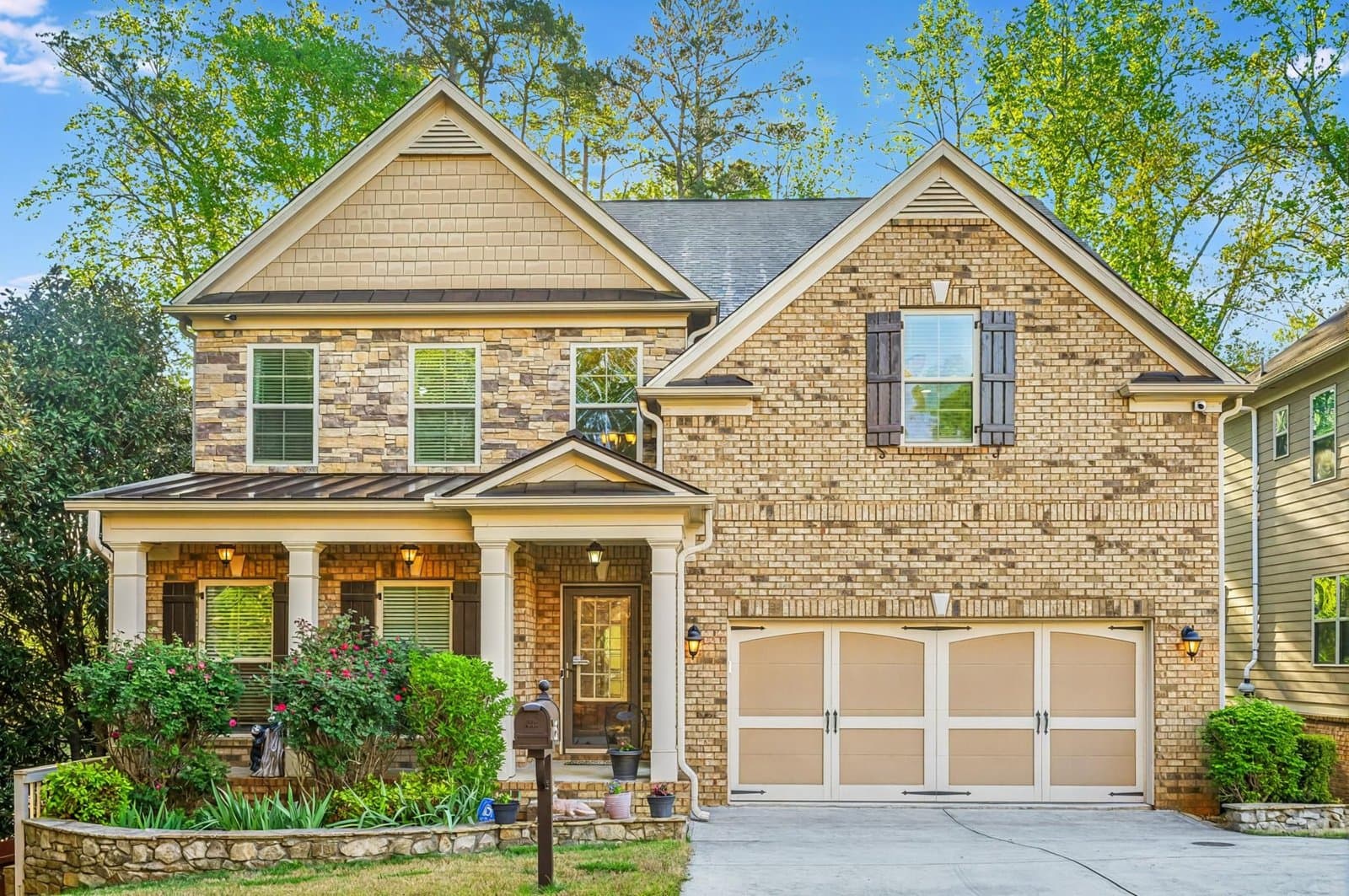
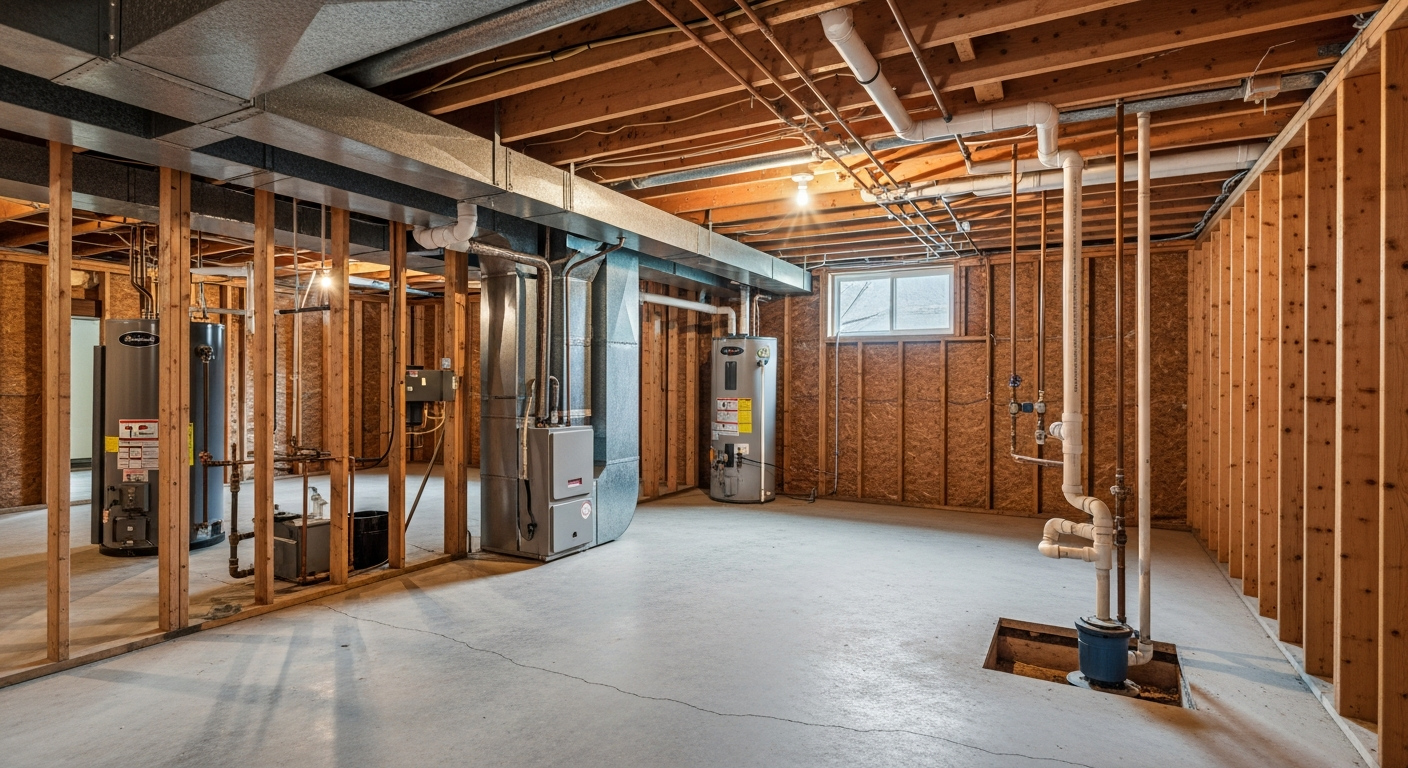
The typical 1990s suburban Atlanta basement is a poured concrete shell with 8-foot ceilings, a central HVAC trunk running down the spine, and a water heater in one corner. The slab is level, the perimeter foundation walls are dry, and there's usually a walkout door to the backyard on the downslope side. The windows are small casement units installed during original construction. They meet code for egress in one or two locations, but not consistently across the entire footprint. The electrical panel is mounted on the wall near the stairs, with a few bare-bulb fixtures scattered overhead. The space is structurally sound, properly graded for drainage, and has been sitting unused for 20+ years.
What kills buyer interest is the visual emptiness. Buyers see concrete and assume finishing will cost $150,000. They imagine complex permitting, unknown moisture issues, and contractors who disappear mid-job. The reality: if the foundation is dry and the slab isn't cracked, finishing is straightforward. The footprint is already there. The HVAC trunk is already routed. The waste stack is already positioned. The trap isn't the basement itself: it's homeowners who delay finishing until 60 days before listing, then panic-hire the cheapest contractor and end up with a half-finished space that doesn't appraise.
Beckett Real Estate has finished 40+ Atlanta basements since 2020. The construction-eye discipline is simple: test the slab moisture content before any framing, verify egress window compliance before calling it a bedroom, and design around the existing mechanical systems instead of fighting them. Most unfinished basements are 900 to 1,100 square feet. That's enough for a true in-law suite with private entrance, full bath, and kitchenette: the exact configuration multigen buyers filter for on the MLS.
Style direction: In-Law Suite
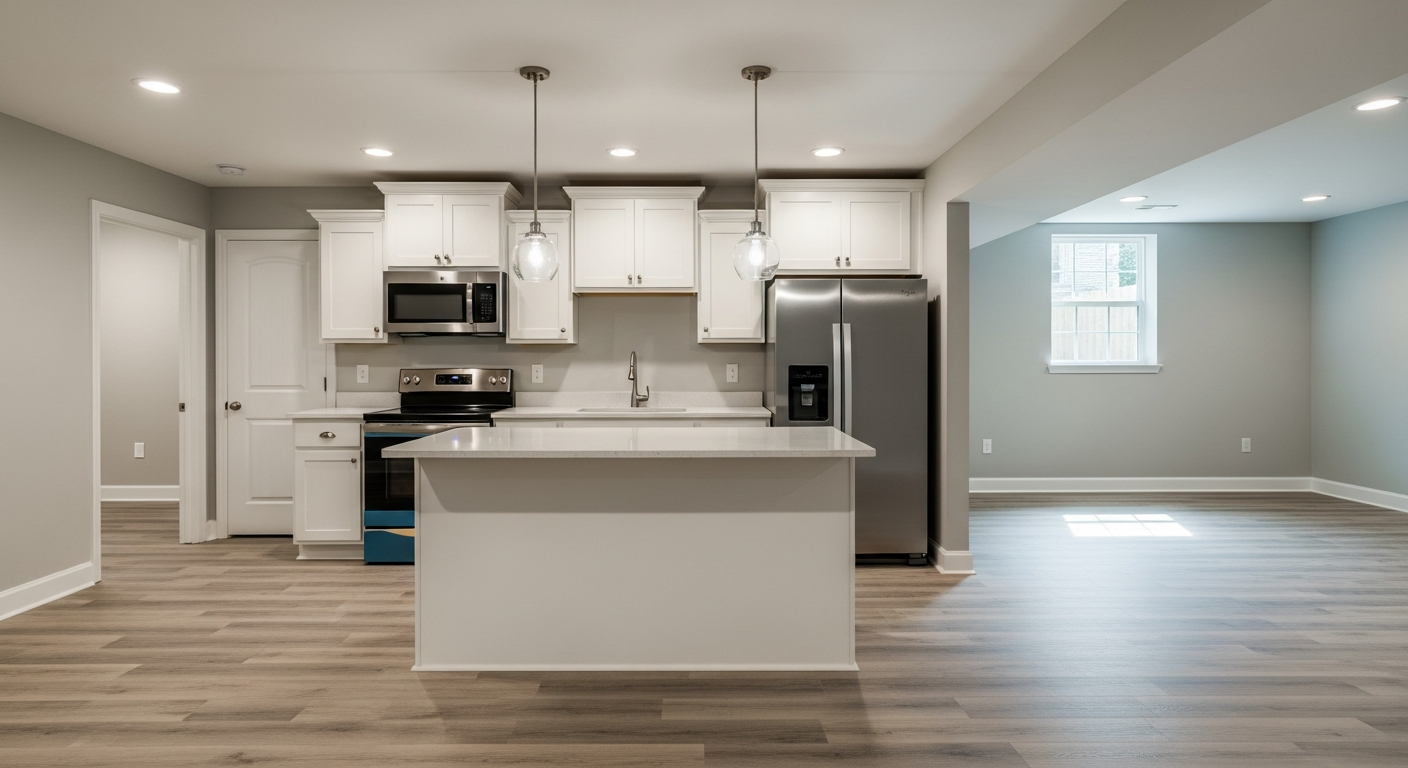
The in-law suite layout prioritizes privacy and code compliance. Beckett Real Estate positions the bedroom at the rear of the basement footprint, adjacent to an existing egress window. If the window opening is undersized, the concrete gets cut and a code-compliant window well is installed. Appraisers measure window dimensions, and a bedroom that doesn't meet egress requirements won't count toward the home's bedroom total. The ensuite full bath is placed directly above or adjacent to the existing waste stack to minimize plumbing runs. The bath includes a walk-in shower with frameless glass, a 36-inch vanity with undermount sink, a standard-height toilet, and an exhaust fan vented to the exterior. The kitchenette occupies 80 linear feet along one wall: 24-inch slide-in range, full-size refrigerator, microwave mounted above the range, undermount sink with garbage disposal, and an 18-inch dishwasher. Upper and lower cabinets are shaker-style in white, with quartz countertops. The kitchenette isn't a wet bar: it's a functioning kitchen that allows an aging parent or adult child to prepare meals without going upstairs.
The ceiling assembly is double 5/8-inch drywall with R-19 insulation and resilient channel clips: this reduces sound transmission from the main level by 60%. LVP plank flooring runs throughout except in the bath, which gets 12x24-inch ceramic tile. The exterior entrance uses the existing walkout door, which is upgraded to a steel unit with a keyed deadbolt. The bedroom partition walls are framed with 2x4 studs on 16-inch centers, with R-13 batt insulation and a second layer of 5/8-inch drywall for sound isolation. Beckett Real Estate paints in three colors: bedroom in Sherwin-Williams Accessible Beige, bath in Extra White, and the main living area in Agreeable Gray. The layout feels like a separate apartment, not a basement retrofit, and that's what multigen buyers expect when they search for in-law suites on Zillow.
Cost breakdown: Atlanta MSA, mid-2026
| Line Item | Cost |
|---|---|
| Frame walls + partitions, vapor barrier, soundproof ceiling assembly | $8,200 |
| Insulation (R-13 walls, R-19 ceiling, sound-rated bedroom partitions) | $2,800 |
| Drywall, level-5 finish, painted in three colors per zone | $9,400 |
| LVP plank flooring (900 sq ft) + ceramic tile in bath | $6,200 |
| Electrical: full panel sub-feed + 240V circuits + recessed throughout + dimmers | $7,800 |
| HVAC: dedicated zone with new air handler + supply/return runs | $5,400 |
| Full bath: walk-in shower with frameless glass, vanity, toilet, exhaust fan | $11,500 |
| Kitchenette with full-size appliances, sink, dishwasher, cabinets, countertops | $8,800 |
| Egress window enlargement if needed (cut concrete, install code-compliant window well) | $4,200 |
| Permits, radon passive vent, contingency, contractor markup | $14,200 |
| Total | $78,500 |
Beckett Real Estate's construction-eye notes
What to keep: the existing egress windows if they're already code-compliant (28 inches wide minimum, 20 inches tall minimum, sill height no more than 44 inches above the floor), the HVAC trunk routing (new supply and return runs tie into the existing ductwork: no need to replace the upstairs air handler), the water heater and main shutoff valve location (design the layout so these remain accessible), the sump pump and its dedicated electrical circuit (if the basement has one, it must stay functional), and any rough plumbing stubs that were installed during original construction (many 1990s builders roughed-in a future bath even if they didn't finish it). The discipline is in what not to add: don't frame a hallway that wastes 60 square feet when an open layout works better, and don't position the bath on the opposite side of the basement from the existing waste stack unless the budget includes an additional $6,000 for a sewage ejector pump.
What to gut: nothing, because the basement is unfinished. The construction-eye advantage is that basement finishing is greenfield work: every decision is additive, not subtractive. There's no demo cost, no hazmat abatement, no existing finishes to protect. The trap is in what contractors skip: framing perimeter walls directly against the concrete without installing a vapor barrier sealant on the foundation wall. Atlanta humidity condenses on cold concrete, and that moisture wicks into the bottom plate of the framed wall. Within five years, the wood rots and the drywall above it cracks. Beckett Real Estate uses a rolled-on vapor barrier on the concrete, then frames the wall 3/4 inch off the foundation with a small air gap. The bottom plate never touches concrete.
The second trap is flooring. LVP plank is the safe choice because it's moisture-tolerant and installs as a floating floor: no adhesive, no nails, no moisture-transmission risk. Real wood will cup within 18 months if the slab moisture content is above 4.5%. Beckett Real Estate tests every slab with a calcium chloride kit before specifying flooring. The test costs $80 and takes 72 hours. Skipping it is the most expensive decision a homeowner makes, because replacing cupped wood flooring costs $12,000+ and requires moving all furniture out of the basement twice.
The third trap is egress. Appraisers measure bedroom windows. If the opening is 26 inches wide, it doesn't matter that it's "close enough." The appraiser will classify that room as bonus space, not a bedroom. The home won't show up in MLS searches filtered for four bedrooms, and buyers touring the home will see the basement as unfinished square footage. Cutting concrete and installing a code-compliant window well costs $4,200 during the framing phase. Retrofitting it after the drywall is hung costs $9,000+. The fourth trap is radon. Fulton, Cobb, Cherokee, and Forsyth counties all have elevated radon zones. A passive radon vent stack (a 4-inch PVC pipe that runs from under the slab to the roof) costs $400 if installed during framing. Retrofitting it later requires sawing through the slab and costs $4,000+. Beckett Real Estate includes it in every basement finish, whether the test shows elevated levels or not.
Home value impact
Remodeling Magazine's 2024 Cost vs. Value report for the Atlanta MSA shows basement mid-range remodels recoup 70% at sale. A $78,500 investment returns approximately $55,000 in added home value. The larger impact is qualifying for a different buyer pool. Multigen buyers (families with aging parents or adult children living at home) filter MLS searches for homes with separate living quarters. A four-bedroom home with an unfinished basement shows up in 60,000 Atlanta MLS searches. The same home with a finished in-law suite shows up in 78,000 searches. That 25% increase in buyer visibility is the difference between 12 showings in the first week and 31 showings. The basement doesn't just add square footage: it repositions the home in a higher-demand segment.
For an honest opinion and a realistic evaluation, contact Beckett Real Estate. Call Evan now: 866-578-8917 or schedule a free consultation.
Thinking about a move?
Beckett Real Estate works the whole of Metro Atlanta. Tell me the address or the neighborhood and I will tell you what the house is really like, what the inspection usually finds, and what the number should be.
Estimate your renovation costSearch homes for saleTalk to an agent nowMore articles like this